
HR teams today handle employee data, payroll, benefits administration, compliance, and employee relations, all while making the workplace more engaging. And they have to do it with limited time and staff.
The real bottleneck is manual work. HR teams lose hours every week updating spreadsheets, chasing managers for information, fixing payroll mistakes, and wrestling with disconnected systems. That slows down hiring, weakens workforce reporting, and raises compliance risk.
This is why more businesses are turning to HR solutions. The right tools automate administrative tasks, centralize employee management, and give HR teams real-time visibility without the constant paperwork.
In this guide, we break down what human resource solutions are, how to choose the right ones, and which platforms save the most time in 2026. We cover the core HR systems every business needs to simplify processes and scale without adding more manual work.
What Are Human Resource Solutions?
Human resource solutions are the tools, systems, and support that help businesses manage their employees and run core HR functions without relying on manual processes.
At a basic level, they help HR teams store and manage employee data, run payroll and HR operations, track time and attendance, manage benefits enrollment, and support employee performance. More importantly, they remove friction. They reduce the administrative burden that slows teams down and creates unnecessary risk.
What Counts as an HR Solution Today
The specific HR solutions a business needs depend on its size and stage. For many, this starts with cloud-based HR software that acts as a central HR platform for employee records, reporting, and employee self-service. These platforms allow employees to update personal information, managers to access workforce data, and HR teams to manage everything from onboarding new hires to benefits administration.
Other common examples include applicant tracking systems (ATS) that support the hiring process, payroll integration tools that keep payroll and employee data aligned, and time and attendance systems that eliminate manual tracking.
Some organizations work with a professional employer organization or use PEO services to handle compliance, benefits, and HR support outside their office doors. In this case, keep in mind that the software you choose should integrate with the PEO's tech stack, no matter what it is.
Regardless of the format, the purpose is the same: reduce time-consuming administrative work and make employee management more efficient and reliable.
11 HR Tasks You Can Automate with AI (2026 Update) →
How to Choose the Right Human Resource Solutions
The best human resource solutions solve a specific problem the team already has. Before adopting new HR tools, step back and identify where HR teams are losing time.
Start here:
- Spot your biggest time drains. Where is HR stuck doing manual work? Updating employee data in five places, chasing time-off approvals, fixing payroll mistakes, and managing benefits enrollment over email. If it’s repetitive and time-consuming, it’s a candidate for automation.
- Don’t collect tools. Too many HR systems mean messy workforce data, duplicate administration, and constant switching between platforms. Look for HR solutions that bring things together in a single platform instead of adding another login.
- Admit when spreadsheets aren’t enough. Spreadsheets work until they don’t. Once you’re juggling more employees, reporting, and compliance, they create risk instead of control. That’s the sign it’s time for a proper HR platform.
- Be realistic about build vs. buy. Building your own HR software sounds smart until you’re maintaining it forever. Most businesses are better off buying proven systems or using external HR support like a professional employer organization. Less risk. Less headache.
- Go for something affordable: You won't have to go about convincing the CFO to buy software if you can just use a SaaS solution that starts for free and can be up and running with a few clicks.
Strategic vs. Operational HR Solutions
Some HR solutions help with day-to-day operations. Others help HR leaders make better long-term decisions. Knowing the difference helps narrow the search.
Operational solutions handle the essentials: managing employee records, running payroll, tracking attendance, and maintaining compliance with regulatory requirements. These are the systems that keep the organization running smoothly.
Strategic solutions help HR teams go beyond administration. They provide data-driven insights into employee engagement, employee performance, and workforce trends. These insights help organizations improve talent management, support development programs, and make smarter workforce decisions over time.
Both matter. Without operational systems, HR becomes reactive and overwhelmed. Without strategic visibility, it’s harder to improve employee experience or plan for growth.
Core Human Resource Solutions Every Business Needs
Before adding advanced HR tools, the basics need to be locked down. These are the human resource solutions that keep daily operations running and prevent HR from wasting time on avoidable admin work.
Employee Records and Data Management
When employee data is scattered across spreadsheets, emails, and different HR systems, things fall apart fast. Records get duplicated, information becomes outdated, and reporting becomes unreliable.
A central HR platform fixes this. It keeps all employee data in one place, so HR teams and managers can access accurate information, track history, and manage employees without second-guessing the data. It makes compliance and reporting much easier too.
Policy and Document Management
Policies, contracts, and internal documents shouldn’t live in random folders or inboxes. When there’s no central system, employees constantly ask HR for copies, and outdated versions circulate. Modern HR software solves this with employee self service, so employees can access what they need on their own. HR keeps control, maintains version accuracy, and avoids constant back-and-forth.
Time-Off and Absence Management
Tracking time-off manually is one of the fastest ways to create unnecessary admin work (and to ultimately leave your employees disgruntled.)
Requests get buried in emails, spreadsheets become messy, and managers lack visibility. Time and attendance systems let employees submit requests directly and allow managers and HR teams to see everything in one place. This helps simplify manual work, improves accuracy, and makes absence management far less problematic.
3 Human Resource Solutions That Save Time in 2026
Not all human resource solutions save the same amount of time. The platforms that make the biggest difference are the ones that eliminate manual work, centralize employee data, and combine multiple HR tasks into one place.
Here are three of the best:
TalentHR
TalentHR is an all-in-one human resource solution for growing businesses. It brings employee records, time and attendance, applicant tracking, onboarding, and performance management into a single platform, so HR teams don’t have to deal with multiple tools.
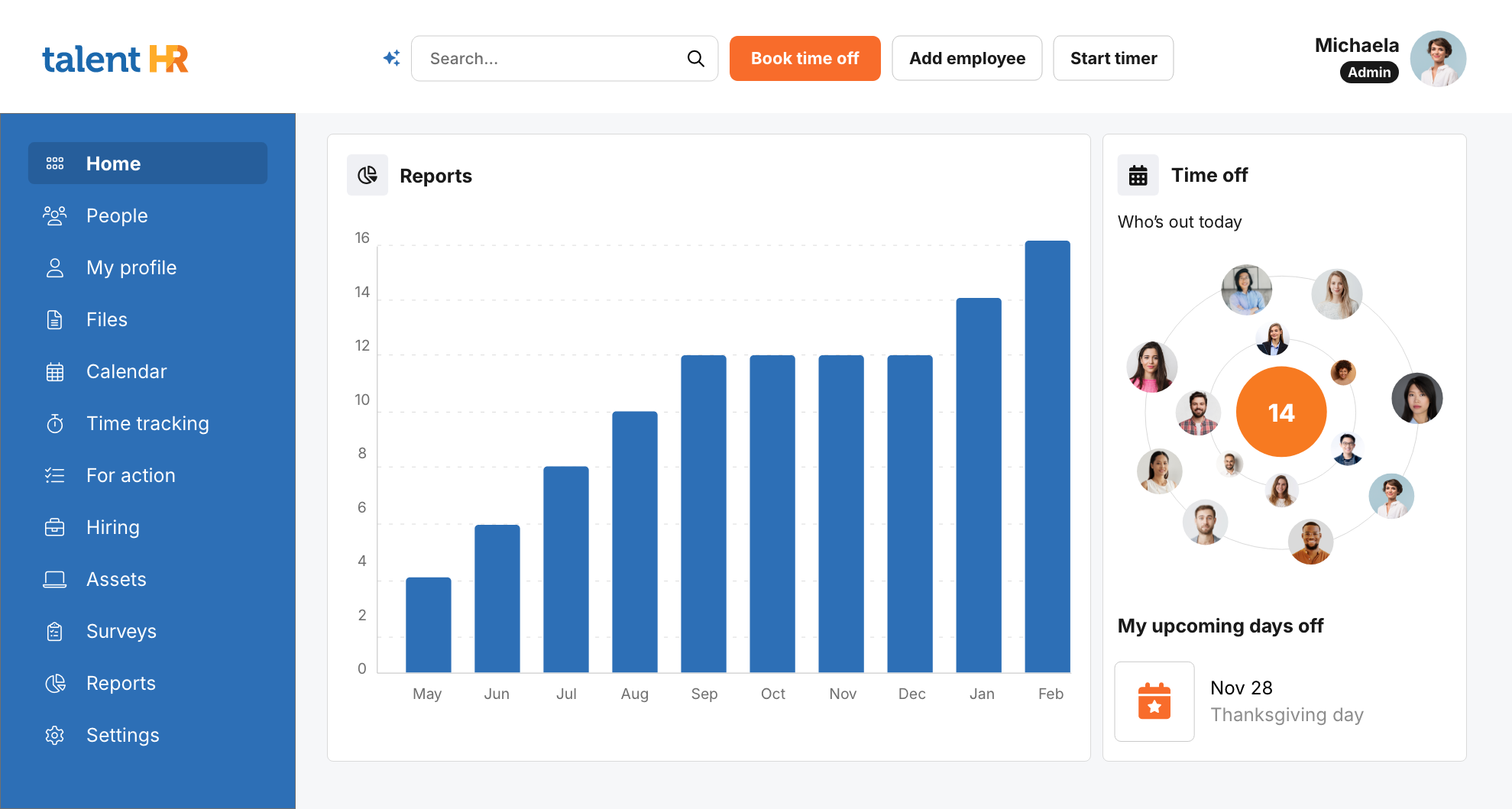
Why it saves time:
- Keeps employee data, documents, and reporting in one place
- Automates onboarding, time-off tracking, and routine HR workflows
- Simplifies the hiring process with built-in applicant tracking
- Provides ready-to-use reporting and people analytics
- Easy to use, fast to set up, and built to scale with your team
- Includes AI tools for HR to help generate job descriptions, answer questions, and speed up repetitive tasks
Best for: startups and mid sized businesses that want an easy-to-use HR platform without unnecessary complexity.
Pricing: Free plan for up to 10 users, with paid plans starting at $2 per user/month (Essential) and $4 per user/month (Premium), plus a free trial of premium features.
Deel
Deel is an HR platform built for companies that hire and manage employees internationally. It combines global payroll, employee management, hiring, compliance, and contractor management in one system, which makes it easier to run HR across multiple countries.
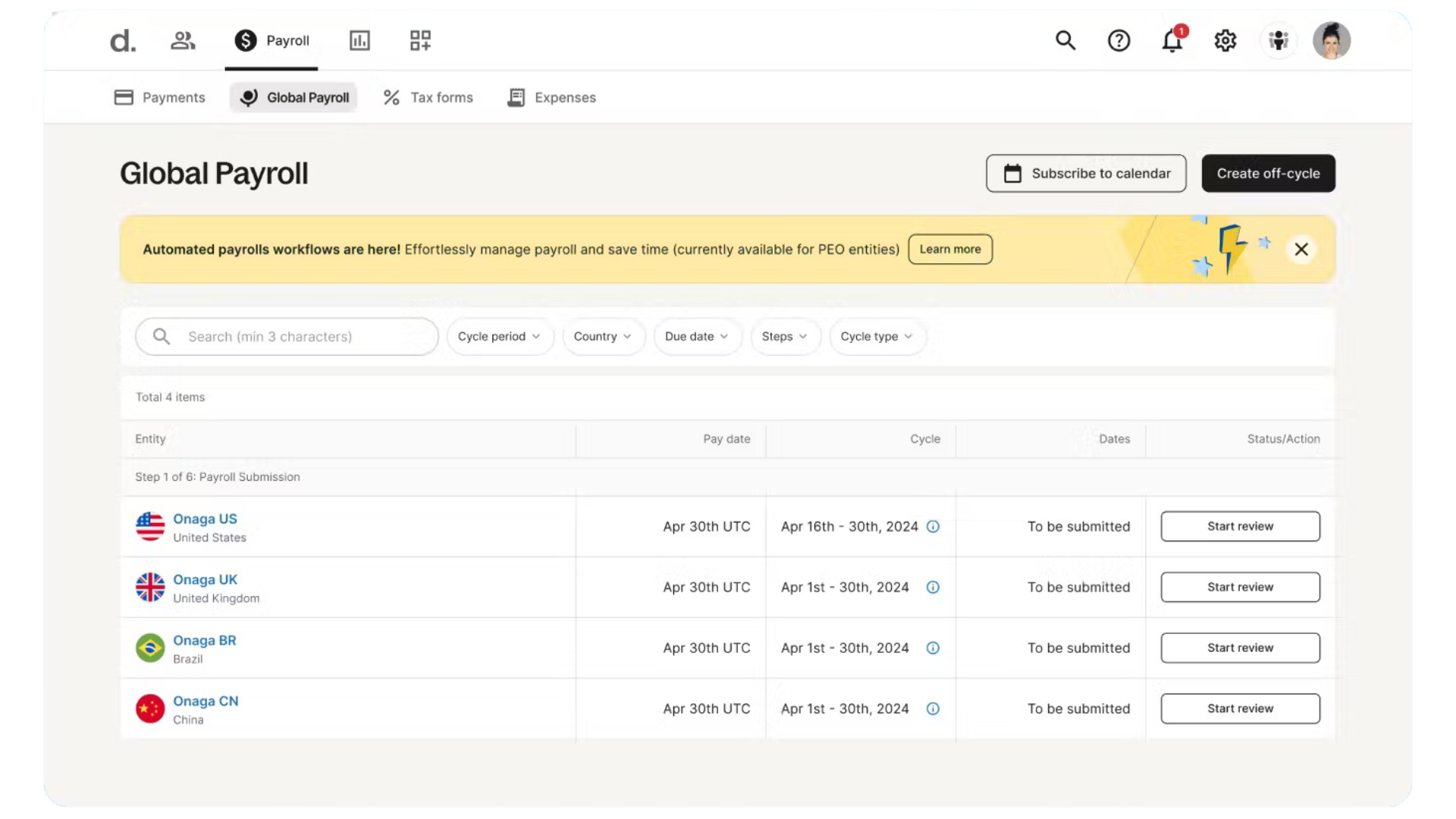
Why it saves time:
- Manages global payroll, contracts, and compliance in one system
- Simplifies hiring and onboarding for international employees
- Centralizes workforce data, reporting, and employee management
- Reduces manual work when managing contractors and global teams
Best for: companies with remote or international teams that need a centralized way to manage global HR, payroll, and compliance.
Pricing: Free HRIS available, with paid plans starting at $49 per contractor/month, $125 per employee/month for US payroll, and $599 per employee/month for Employer of Record (EOR) services. Pricing varies by country and features.
BambooHR
BambooHR is an HR platform designed to help companies manage the full employee lifecycle and HR reporting. It’s often used by businesses that need more structure and visibility as their workforce grows and have the budget to afford it.
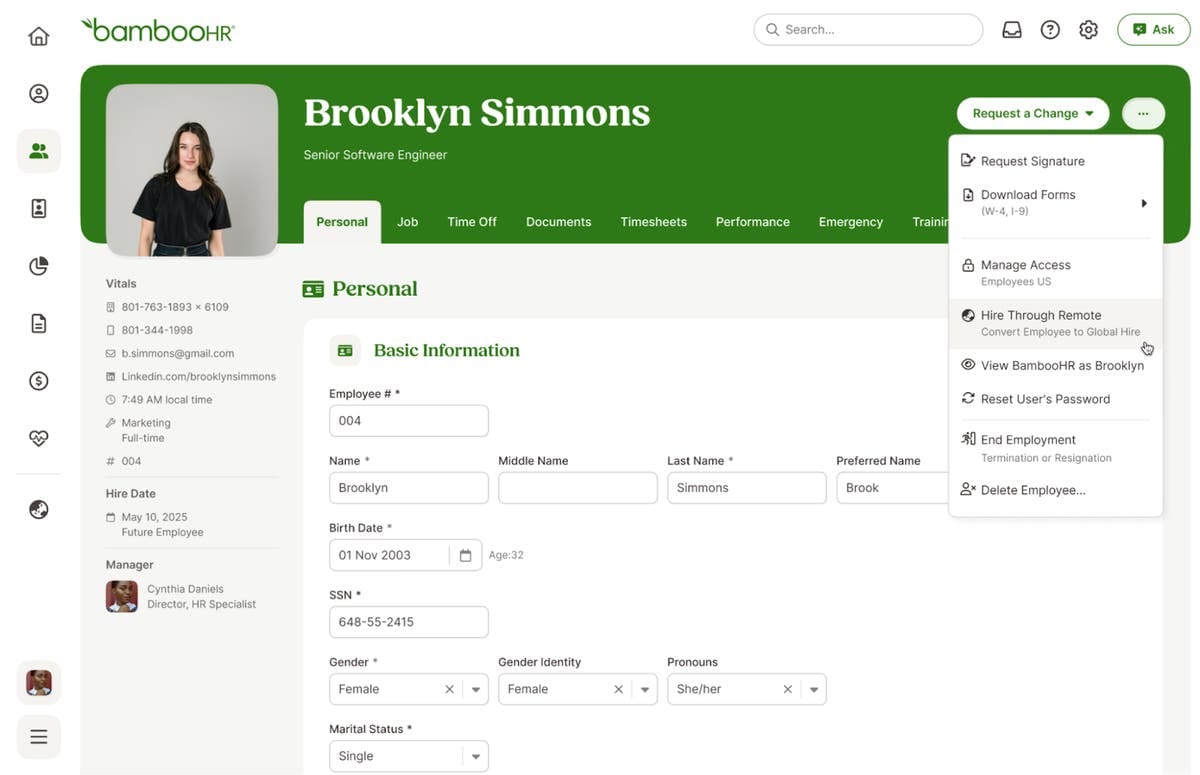
Why it saves time:
- Stores employee records, documents, and HR data in one system
- Simplifies hiring, onboarding, and employee lifecycle management
- Automates time-off tracking and reduces manual admin work
- Provides built-in reporting and HR data insights
Best for: Growing companies that want a centralized HR system to replace manual tracking and improve visibility across HR processes.
Pricing: Custom pricing based on company size and features, with Core, Pro, and Elite plans available.
Common Mistakes When Implementing HR Solutions
Even good human resource solutions can fail if they’re rolled out the wrong way. Most problems come from implementation rather than from the software itself.
- Buying too many tools. More HR tools mean more confusion. Employee data gets split across different HR systems, reporting becomes unreliable, and HR teams waste time syncing information. Fewer, more connected systems are almost always better.
- Ignoring adoption. If employees and managers don’t use the system, nothing improves. HR ends up doing the same manual work as before. Good HR solutions should make life easier for everyone, especially through employee self-service and simple workflows.
- Over-customizing everything. It’s tempting to customize every detail, but too much customization makes HR software harder to maintain and update. Simple, standard processes are easier to manage and far less risky long-term.
- Treating HR tech as “set and forget.” HR systems need occasional check-ins. Compliance rules change, payroll integration needs monitoring, and workflows evolve as the company grows. Without regular review, small issues turn into bigger problems.
The 7 Types of HRIS Systems (Human Resource Information Systems) →
Use Human Resource Solutions To Gain a Competitive Advantage
Time is HR’s scarcest resource. When too much of it goes into manual work, payroll fixes, or administrative follow-ups, there’s less room for employee engagement, development programs, and improving employee experience. Smart human resource solutions change that.
The right HR solutions automate repetitive tasks, centralize employee data, and reduce compliance risk. That frees HR professionals to focus on what moves the business forward: supporting managers, strengthening company culture, improving employee performance, and making smarter workforce decisions.
TalentHR is a good place to start. Its free plan lets you try core features with no commitment and makes it easy to see how a modern HR platform can save your team time as you grow. Register for free (no credit card needed)!
FAQs on Human Resource Solutions
Q: Are human resource solutions only for large companies?
A: Not at all. Small businesses often benefit the most because they have lean HR teams and less room for manual errors. Even basic HR software that centralizes employee records, payroll, and HR processes, and time and attendance, can dramatically reduce administrative work.
Q: How often should businesses review their HR solutions?
A: At least once a year and anytime there’s major growth, new hires, or process changes. As your organization evolves, your HR systems should too. Regular reviews help detect gaps, reduce risk, and ensure your solutions support your team instead of slowing it down. That's why it's always a good idea to start out with software that scales, so that you can choose to unlock new features after your yearly assessment.
 Set your PTO policy once. The rest is automatic.