A talent management system (TMS) is software that helps organizations manage performance, employee development, goal alignment, and career growth in a structured, consistent way. Instead of treating these activities as isolated HR tasks, a TMS connects them into a single system that supports the entire employee life cycle.
As teams grow, it becomes harder to answer basic questions: Who is performing well? Where are skills gaps? Which employees are ready for more responsibility? When this information lives in spreadsheets and disconnected tools, talent decisions turn reactive. Without unified data, HR teams spend more time chasing information than using it to guide talent decisions.
At the same time, the role of HR is changing. SMBs are moving from basic HR administration toward talent enablement as they invest in building the right capabilities, supporting managers, and developing people in ways that directly impact performance and retention. That shift requires systems designed for performance management, learning, feedback, and talent analytics, far beyond recordkeeping.
This article is a practical buyer’s guide to talent management systems for SMBs. It explains what a TMS includes, what features matter most, how to evaluate options, and which tools are best suited for small and mid-sized organizations so you can choose a system that supports growth without unnecessary complexity.
What Is a Talent Management System (TMS)?
Traditional HR software is primarily built to store employee data and run operational tasks like payroll, benefits administration, and job postings. A TMS goes further. It focuses on how work gets done, how skills are built, and how people progress. The goal is to give HR teams, managers, and leaders better visibility into performance, skills, and potential so they can make stronger talent decisions.
Most talent management systems are built around five core pillars:
- Performance management. Tools for performance reviews, continuous feedback, and manager check-ins. These features help standardize performance conversations, support goal alignment, and reduce bias across teams.
- Learning and development. Learning paths, training programs, and employee development plans that support skill building, career growth, and long-term talent development.
- Goal tracking. Clear company, team, and individual goals connected to business outcomes. This keeps employees focused and helps leaders see how work ties back to priorities.
- Feedback surveys. Engagement surveys and pulse checks that capture employee sentiment and highlight risks related to engagement or retention.
- Talent analytics. Reporting and insights that show trends in performance, skills, engagement, and development. This supports workforce planning and skills-based workforce planning.
TMS vs. HRIS
An HRIS (Human Resources Information System) is built to manage core HR operations such as employee records, onboarding, payroll, and benefits.
A TMS is built to manage performance, learning, career paths, and internal talent. While some overlap exists, the focus is different:
- HRIS = employee data and administrative HR
- TMS = performance, development, and growth
Many SMBs use both: an HRIS for core HR and a TMS for talent management.
TMS vs. HCM
An HCM (Human Capital Management) platform typically combines HRIS features with talent management, recruiting, compensation management, and sometimes workforce planning.
A TMS is narrower in scope but deeper in capability for performance management, employee development, skills intelligence, and career development. For SMBs that already have payroll and core HR covered, a standalone TMS can be a simpler way to strengthen talent strategies without paying for large, bundled suites.
The 7 HR Reports You Need Monthly →
Key Features (like Performance Management and Employee Development) SMBs Should Look for in a TMS
Not all talent management systems are built with SMB realities in mind. Some platforms are packed with enterprise features that drive up cost and setup time without improving outcomes. Others focus on the essentials and make adoption easier for HR teams, managers, and employees.
A helpful way to evaluate a TMS is to separate must-have core features from advanced (but SMB-relevant) features.
Core Features (Must-Haves)
These are the necessary features you should look for:
- Performance reviews and continuous feedback. A TMS should support structured performance reviews, regular check-ins, and ongoing feedback. This creates consistency across teams, improves performance management, and helps managers coach more effectively. Look for flexible review cycles, customizable templates, and simple ways to document feedback.
- Goal tracking. Goal tracking connects individual objectives to team and company priorities. This supports goal alignment, keeps employees focused, and gives leaders visibility into progress and outcomes.
- Employee development plans. Strong talent management systems make it easy to create and track employee development plans tied to skills, learning, and career paths. This supports talent development, internal mobility, and long-term retention.
- Reporting and analytics. Basic talent analytics are essential. SMBs should be able to see trends in performance, engagement, goal completion, and development activity. Clear reporting supports data-driven talent decisions and workforce planning without requiring advanced data expertise.
Advanced (But SMB-Relevant) Features
These features are not essential for every SMB, but they can add meaningful value as teams grow and talent strategies become more structured:
- AI-driven insights. Some TMS platforms offer AI-powered recommendations for skills gaps, learning paths, or potential successors. When done well, this can support skills intelligence, succession planning, and skills-based workforce planning.
- Automation and workflows. Automation reduces manual work across HR processes such as review cycles, reminders, approvals, and development plan updates. This helps small HR teams scale without adding headcount.
- Integrations with HRIS/payroll. Integrations allow employee data to flow between systems, creating unified data and reducing duplicate entry. This is especially important when using a separate HRIS for payroll, benefits, and onboarding.
Why Simplicity and Adoption Matter More Than Feature Count
For SMBs, the best TMS is the system that managers and employees actually use. High adoption leads to better data, stronger insights, and better performance outcomes. Complex systems with steep learning curves often result in partial usage, fragmented data, and wasted spend.
Simplicity, intuitive design, and fast setup time are the most competitive advantages for SMBs.
How to Choose the Right Talent Management System for an SMB
The right TMS depends on how your company operates today and what you expect to need next. Start by evaluating the following factors:
- Company size and Growth trajectory. A 30-person company has different needs than a 300-person company. Consider how quickly you expect to grow and whether the system can scale with your workforce. Look for pricing and feature structures that won’t force an early migration.
- HR maturity level. Some SMBs have dedicated HR teams. Others rely on operations managers or founders wearing multiple hats. Choose a TMS that matches your current HR capabilities and supports gradual maturity rather than requiring complex configuration from day one.
- Budget constraints. Talent management systems vary widely in cost. Focus on tools that deliver significant benefits in performance management, development, and retention (not on platforms bundled with modules you may never use).
- Remote or hybrid workforce. If teams are distributed, prioritize cloud-based systems with strong self-service access, mobile-friendly interfaces, and built-in feedback and engagement tools.
- Implementation and Onboarding effort. Ask about setup time, data migration, onboarding support, and training. Faster implementation leads to faster value.
Common SMB Mistakes to Avoid
Many SMBs run into the same problems when selecting a TMS. Avoiding these mistakes can save time, budget, and rework:
- Buying enterprise-grade tools too early, which leads to high costs and low adoption
- Overpaying for unused modules instead of focusing on core capabilities
- Choosing systems that don’t integrate with existing HRIS or payroll tools
The 6 Best Talent Management Systems (TMS) for SMBs
The tools below were selected based on their ability to support performance management, employee development, goal tracking, and talent analytics without introducing unnecessary complexity.
Each talent management system is evaluated using the same criteria to help SMBs compare options quickly and focus on platforms that balance functionality, usability, and scalability.
1. TalentHR
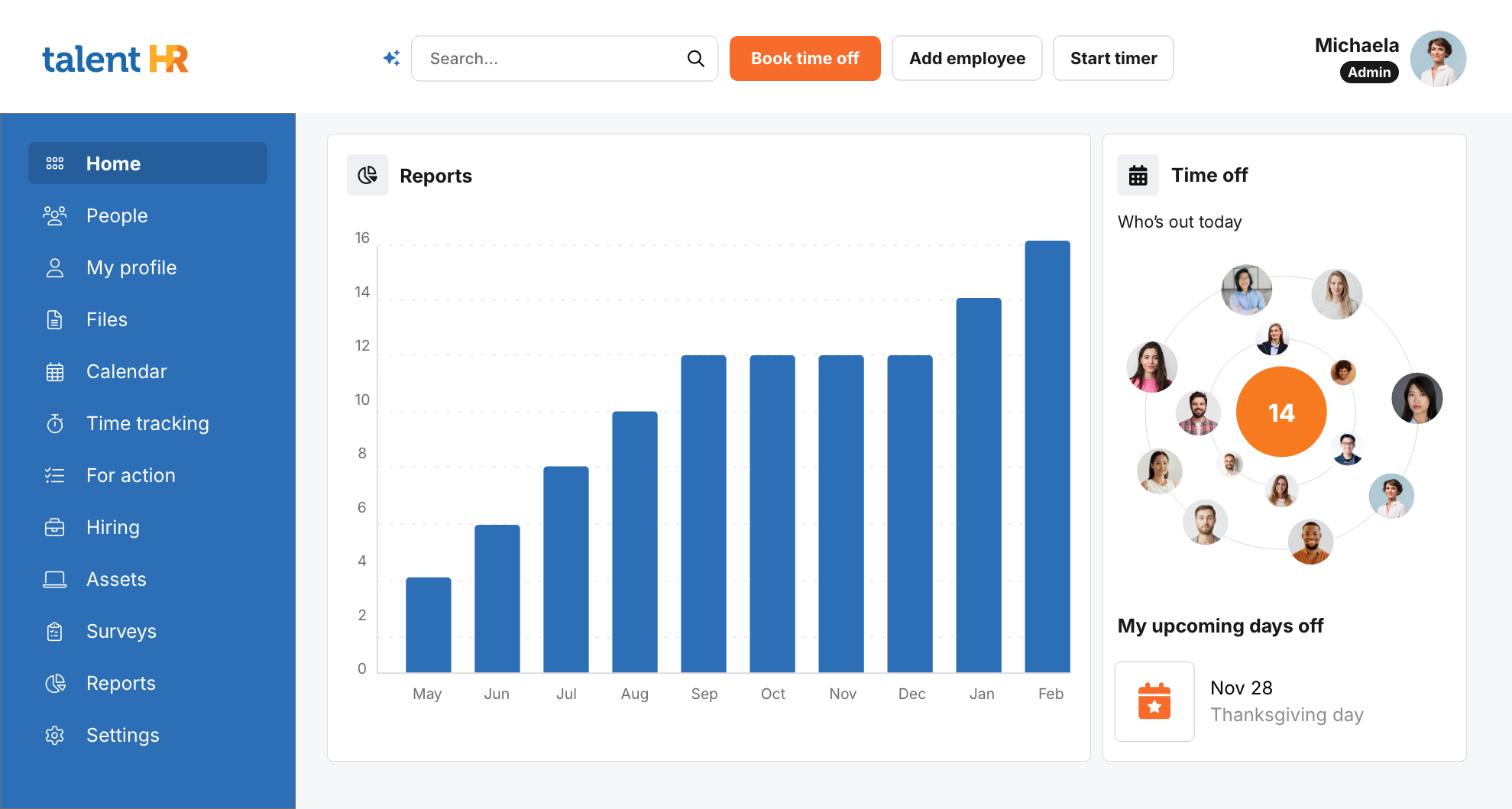
TalentHR is an all-in-one HR platform with strong talent management capabilities, built for startups and SMBs that want simple performance management and employee development alongside core HR workflows. While not a standalone TMS, it covers many of the essential features small teams need to support goal alignment, feedback, engagement, and growth in one system.
Key features
- Performance management and continuous feedback
- Goal setting and goal tracking
- Employee development and career growth support
- People analytics and reporting
- Surveys and employee engagement tools
- Safe Voice (anonymous feedback)
- Hiring and applicant tracking
- Onboarding workflows
- AI-powered HR assistant
- Integrations with tools like TalentLMS and collaboration platforms
Pros: TalentHR offers fast setup, an intuitive interface, and strong value for SMBs. It brings performance, engagement, and development features together, helping reduce tool sprawl and improve adoption.
Cons: TalentHR is still rolling out features, so for highly complex enterprise workflows, its talent analytics are more basic than those found in enterprise-grade TMS platforms.
Best for: It isn’t designed for complex enterprise talent programs.
Pricing: Free plan for up to 10 users. Paid plans start at approximately $2 per user per month (Essential) and $4 per user per month (Premium), billed annually.
2. Lattice
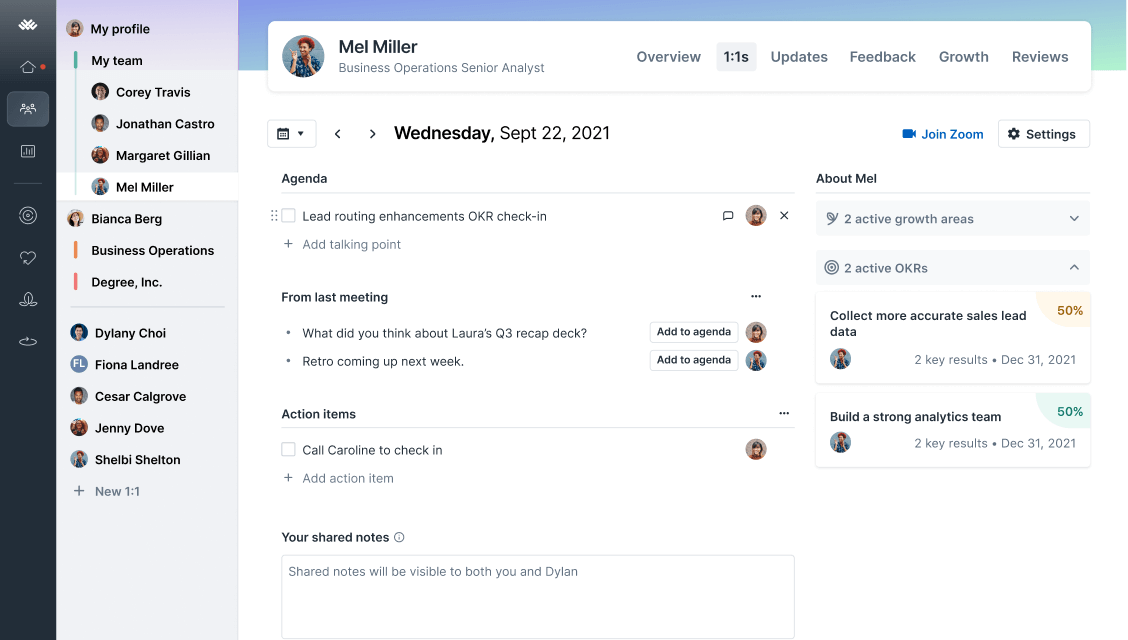
Lattice is a standalone talent management platform centered on performance management, goal setting, engagement, and employee development. It focuses on helping teams run structured reviews, track goals, and support growth, rather than providing full core HR functionality.
Key features
- Performance reviews, talent reviews, promotions, PIPs, calibrations, and succession planning
- Goals and OKRs with cascading goals, progress updates, and reminders
- 1:1s, feedback, praise, and manager tools
- Engagement tools: pulse surveys, employee surveys, eNPS, onboarding and exit surveys
- Grow (development): competencies, career tracks, and individual development plans (IDPs)
- People analytics and dashboards
- AI Agent and Core AI for performance and engagement workflows
Pros: Strong coverage of performance, goals, and development use cases.
Cons: Reporting customization can be limited, and moving between modules may feel less fluid for some users. Doesn’t handle core HR or administrative processes.
Best for: SMBs and mid-sized companies that already use an HRIS and want a standalone TMS for performance management, engagement, and employee development.
Pricing: Talent Management foundations start at around $11 per seat/month, with optional add-ons such as Engagement (+$4/seat/month) and Grow (+$4/seat/month).
3. 15Five
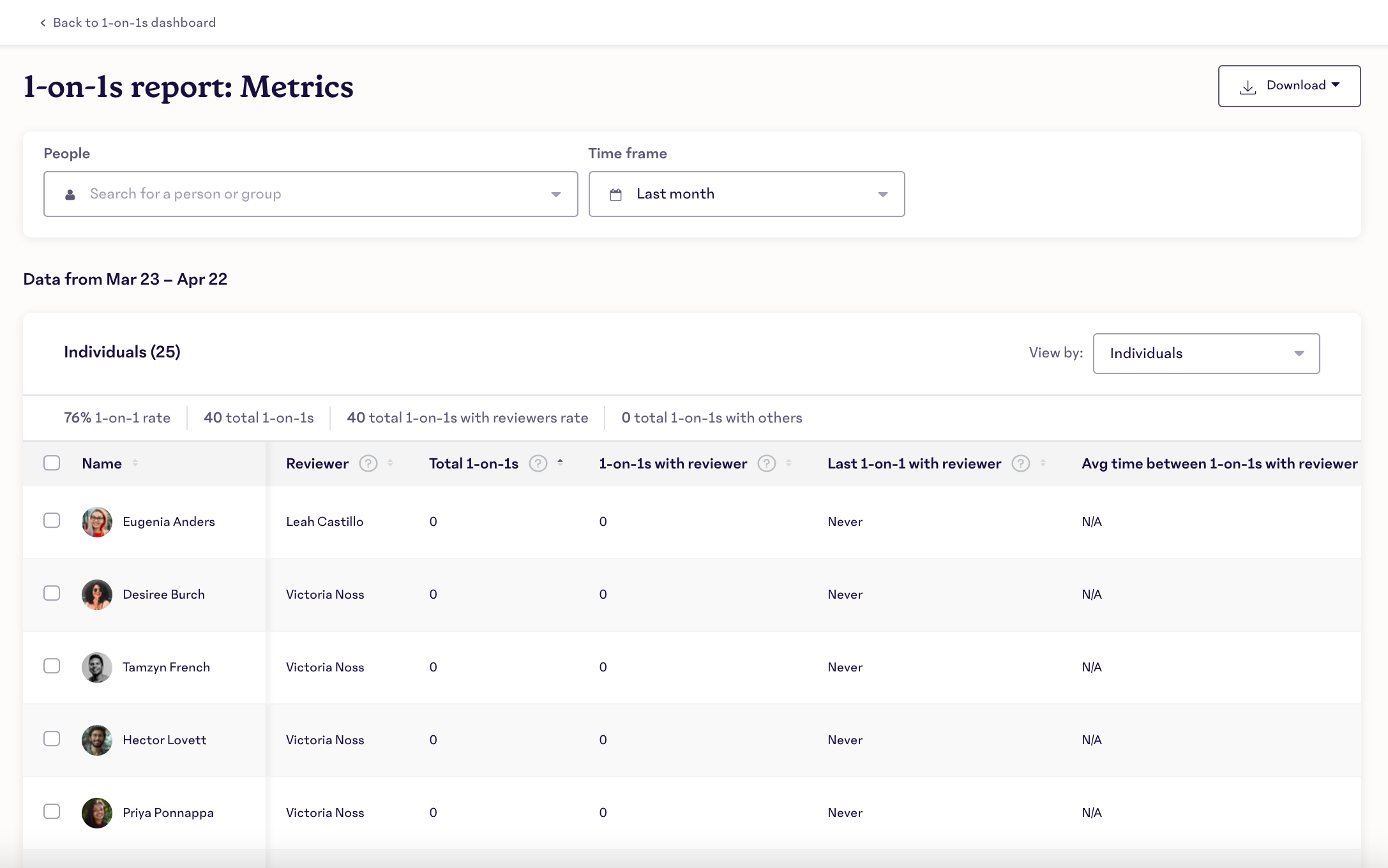
15Five is a performance and engagement–focused talent management platform centered on continuous feedback, goal tracking, and manager effectiveness. It is designed to support ongoing check-ins, reviews, and employee development rather than core HR administration.
Key features
- Performance reviews
- OKRs and goals
- 360° feedback
- Career paths and development plans
- Talent matrix
- HR outcomes dashboard
- Manager effectiveness indicator
- Employee engagement surveys
- Targeted assessments
- Action planning
- Heat maps and data breakdowns
- Benchmarking
Pros: Provides useful performance and engagement data. Supports regular check-ins, 1:1s, OKRs, and feedback.
Cons: Some reviewers say it can be slow and less adaptable for different team sizes.
Best for: SMBs and mid-sized companies that want a dedicated system for continuous performance management, engagement measurement, and goal alignment.
Pricing: 15Five offers tiered plans starting at around $4 per user per month and full feature access around $16 per user per month (billed annually).
4. Culture Amp
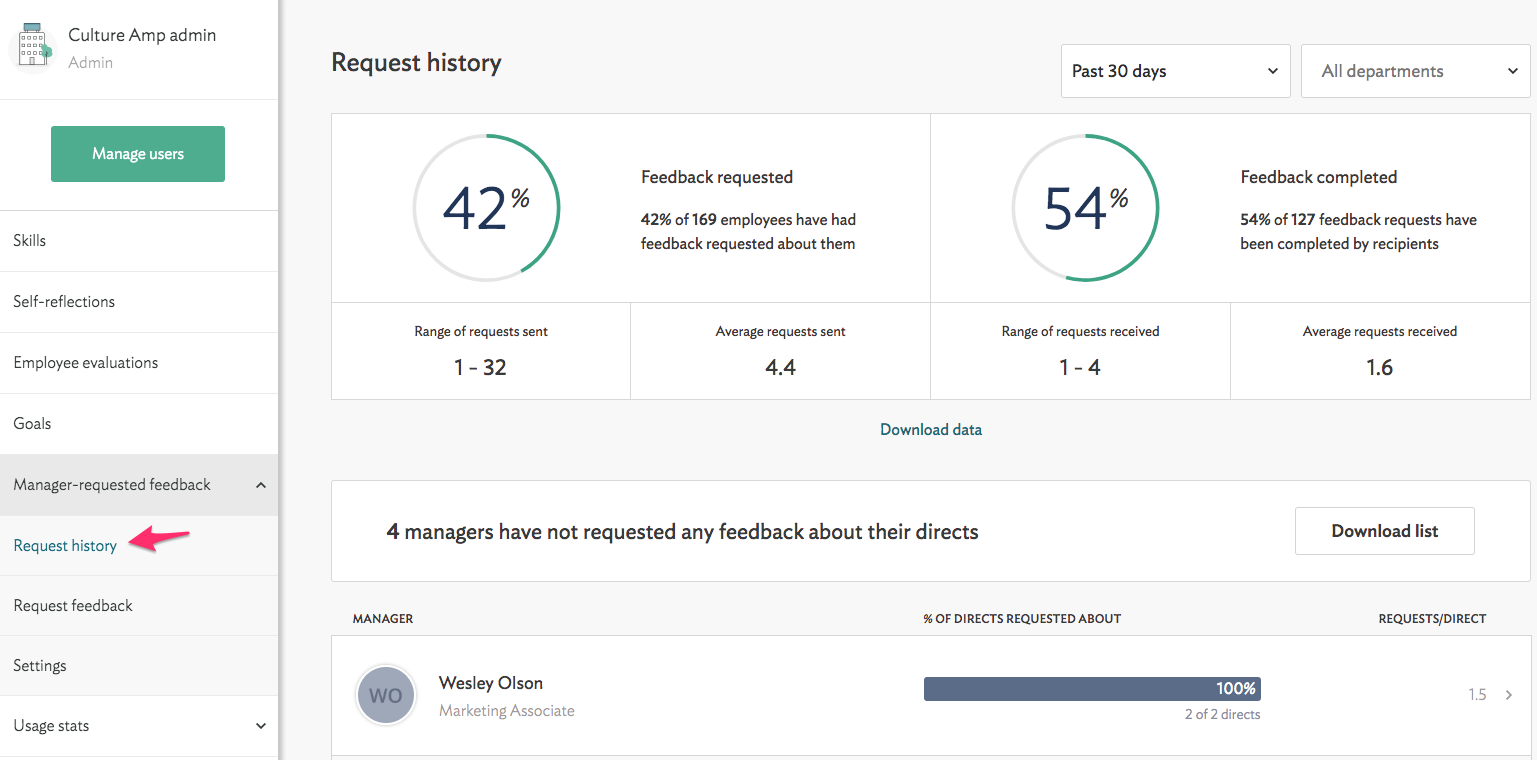
Culture Amp is an employee experience platform with strong coverage across engagement, performance, and employee development. From a TMS perspective, it focuses on helping teams run performance processes, gather feedback, and support continuous growth through surveys, reviews, and development tools rather than functioning as a full HRIS.
Key TMS-related features
- Continuous feedback and performance reviews with calibration
- 1:1 conversations and goal management
- Career paths, competencies, and personalized growth plans
- Retention and performance insights
- Engagement and pulse surveys, eNPS, onboarding/offboarding surveys
- Action planning, benchmarking, and dashboards
- AI-powered comment summaries and Skills Coach
Pros: Easy to collect employee feedback and run surveys. Supports regular performance conversations and development planning.
Cons: Employee data syncing isn’t always reliable. Reporting and workflows may feel limited for larger or more complex organizations.
Best for: Mid-sized organizations looking for strong engagement, performance, and development tools without needing a full HRIS or highly specialized enterprise TMS.
Pricing: Culture Amp uses modular, quote-based pricing based on the products selected (such as Engage, Perform, and Develop).
5. PerformYard
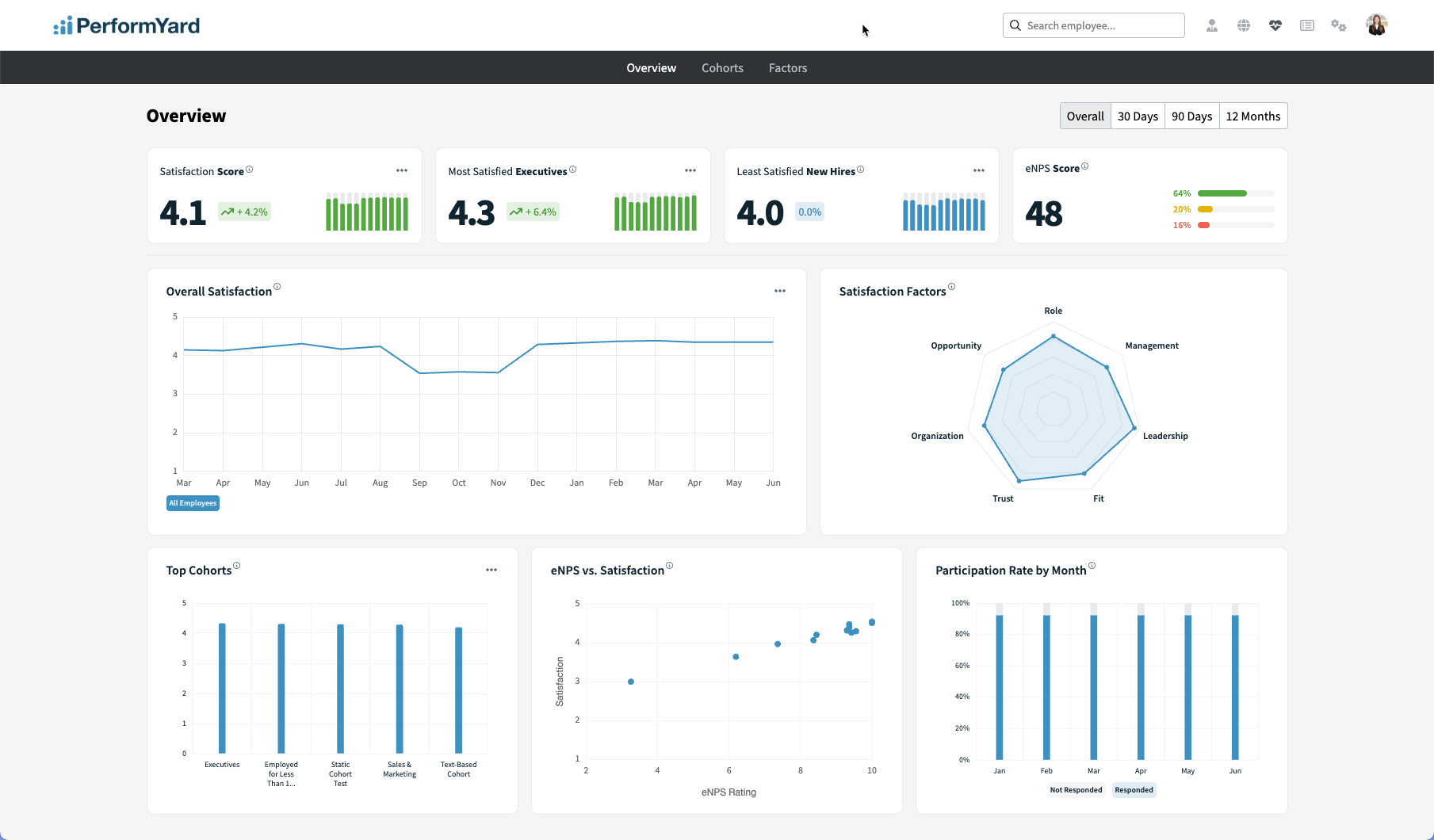
PerformYard is a performance management–focused platform designed to help organizations run structured review cycles, track goals, and support ongoing feedback. It centers on reviews, check-ins, goal management, and engagement tools, with optional add-ons for surveys, meetings, and AI-assisted writing and summaries. PerformYard integrates with common HRIS systems and workplace tools to keep employee data in sync.
Key TMS-related features
- Performance reviews and review cycles
- 360-degree feedback
- Goal management and goal check-ins
- Continuous feedback
- Employee 1:1s and meetings
- Pulse surveys and engagement surveys
- Reporting and analytics
- AI-assisted review writing and summaries
Pros: Easy-to-use system for running reviews and tracking goals. Helps keep performance cycles organized and visible.
Cons: Limited customization and advanced analytics. Navigation can feel slow or unintuitive at times.
Best for: SMBs and mid-sized organizations that want a dedicated performance management system with structured reviews, goals, and feedback, rather than a broad all-in-one HR suite.
Pricing: Performance Management starts at approximately $5–$10 per user per month (billed annually). Add-ons such as AI, employee engagement, meetings, and surveys cost extra per user.
6. Small Improvements
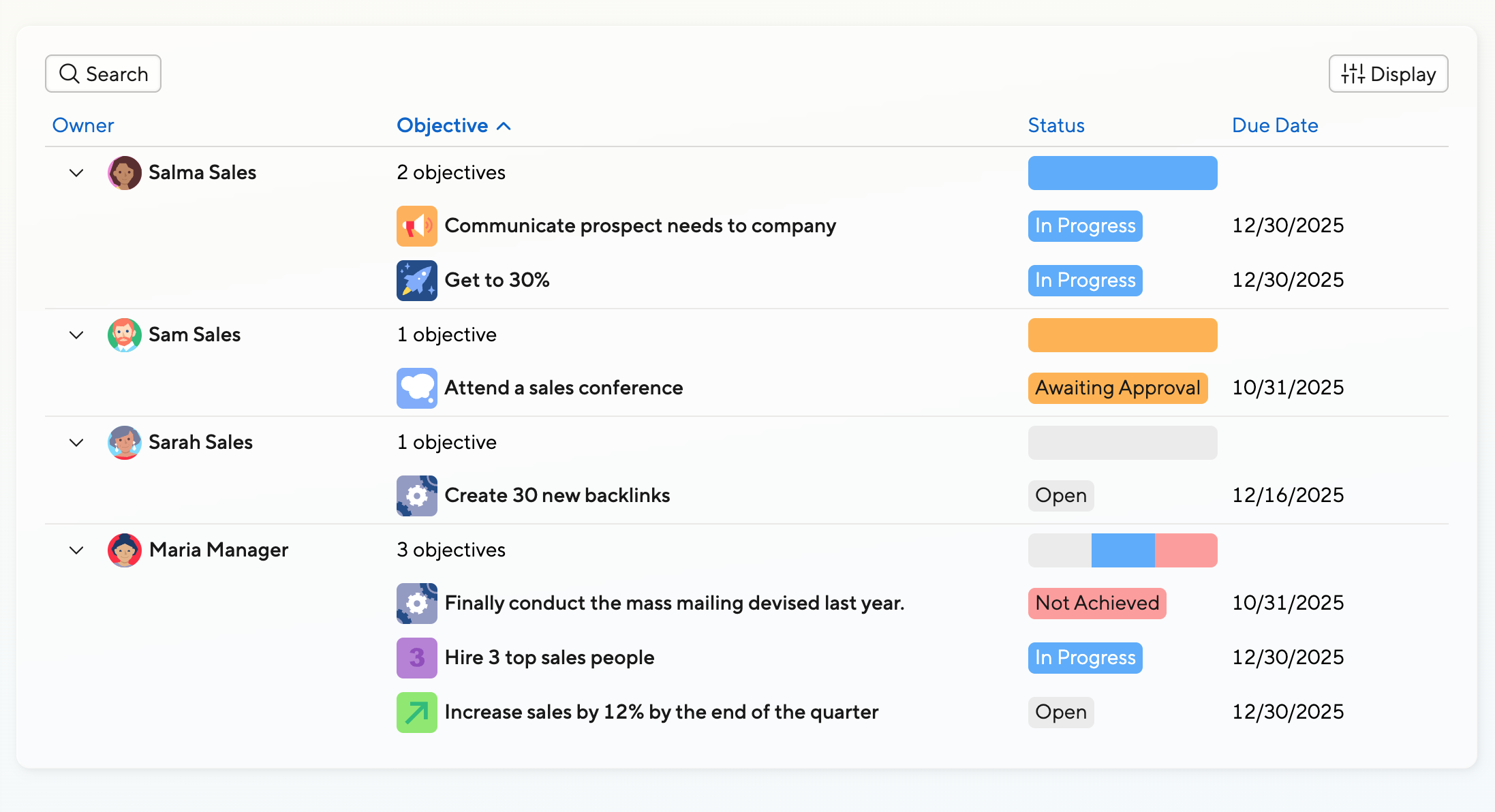
Small Improvements is a performance management platform focused on continuous feedback, performance reviews, and goal alignment for mid-sized organizations. It centers on making review cycles, 1:1s, and feedback easy to configure and run without adding heavy process overhead.
Key TMS-related features
- Performance reviews and customizable review cycles
- Continuous feedback and check-ins
- 360-degree feedback
- Goals and objectives tracking
- 1:1 meeting agendas and notes
- Pulse surveys
- Praise and recognition
- Integrations with tools like Google Workspace, Slack, Okta, and Outlook
Pros: Easy to use and quick to launch. Flexible configuration for reviews and feedback. Helps reduce time spent administering performance cycles.
Cons: Limited native integrations compared to larger platforms. Pricing can become less attractive as the organization grows.
Pricing: Small Improvements states pricing starts at around $3 per user per month. A 30-day free trial is available, and final pricing depends on company size and selected features.
Talent Management Systems vs. All-in-One HR Software: What SMBs Should Know
SMBs usually choose between a standalone Talent Management System and an all-in-one HR platform with built-in talent features. The right choice depends on existing tools and priorities.
A standalone TMS makes sense when a company already has an HRIS or payroll system and wants deeper capabilities for performance management, goal tracking, employee development, and talent analytics. These platforms typically go further in supporting career paths, skills development, and internal mobility.
An all-in-one HR platform is often smarter for early-stage or smaller SMBs that want to centralize core HR, onboarding, time tracking, and basic performance management in one system. Fewer tools mean simpler implementation and lower administrative overhead.
Regardless of approach, avoiding tool sprawl matters. Too many disconnected systems lead to fragmented data, weak reporting, and lower adoption by managers and employees.
11 HR Tasks You Can Automate with AI (2026 Update) →
How Talent Management Systems Improve Performance, Retention, and Growth
Talent management systems improve performance by clarifying goals, supporting regular feedback, and making expectations visible.
They support retention by giving employees clear development paths, learning opportunities, and insight into career progression.
TMS platforms also enable data-driven HR decisions. Reporting and analytics reveal performance trends, skills gaps, engagement levels, and development activity. This helps leaders connect people strategy to business outcomes.
Over time, this creates stronger alignment between talent development and company growth.
Choose a TMS That Grows With Your Business
There’s no universally “best” Talent Management System but only the system that best fits your company’s size, goals, and stage of growth.
For SMBs, the most important factors tend to be adoption, flexibility, and long-term scalability. A TMS should be easy for managers and employees to use, adaptable as your talent strategies evolve, and capable of supporting future workforce planning, career development, and internal mobility.
As you evaluate options, look beyond today’s requirements and consider where your business is heading. The right platform should help you strengthen performance and development today while supporting smarter talent decisions tomorrow.
If you want to see what a simple, SMB-friendly approach to talent management looks like in practice, try TalentHR and explore how it supports performance, engagement, and people analytics without unnecessary complexity.
Register now for free (no credit card needed)!
 Running HR off the side of your desk? There’s help.