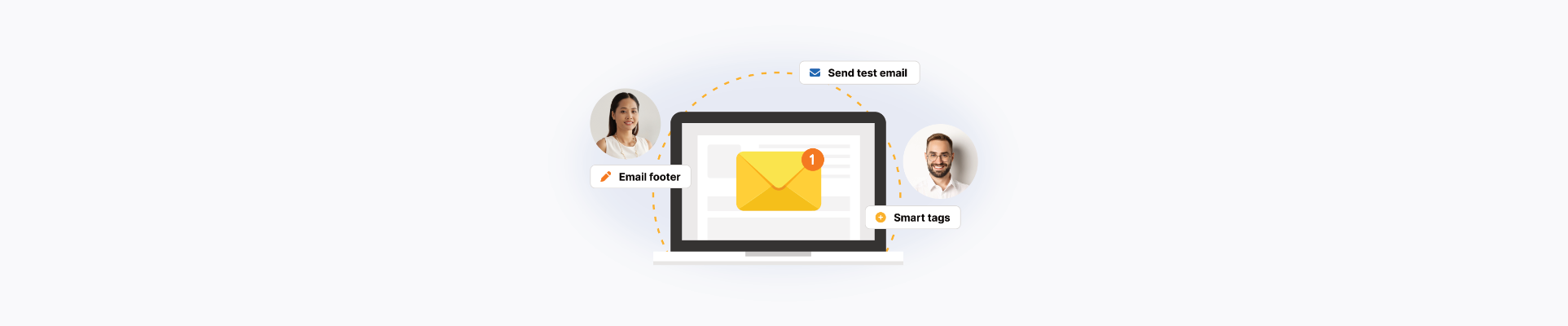
TalentHR system emails — password resets, time-off approvals, performance review reminders, survey invitations — are now fully editable. You can update subject lines, rewrite body content, add dynamic employee data, and customize the footer on every automated notification your organization sends.
This article walks through what you can change, how to do it, and where it's most useful.
What Can You Edit?
1. Subject Lines
The default subject lines are functional but generic at times. A more specific subject line can help employees understand what's being asked of them before they even open the email.
For example:
- Replace the general "You have a new time off request" with "{User Full Name} has requested {Time Off Type}" so that time off approvers know what they're dealing with before even opening the email. Is it a vacation request planned weeks in advance, or a sick day, meaning this member of your team is already out for the day?
- If you've set up expiring records, the default "{Custom Field Name} for {Owner Name} is expiring soon" works fine if you're overseeing a process and a colleague is already handling it. In that case, the email is just a nudge. But if this notification is your main signal to act, replace it with "{Custom Field Name} is expiring on {Expiration Date}" so you know immediately how urgently you need to respond.
2. Body Content
You can rewrite the full body of any template. Common reasons teams do this:
- Adding context that reduces confusion. If employees regularly contact HR with the same question after receiving a particular TalentHR notification, that's a signal the email isn't clear enough. Rewrite the instructions to answer that question upfront. For example, you can add a link to a document, video, or calendar invite explaining how to complete a performance review questionnaire — or include a few best practices right in the email itself.
- Matching your organization's communication style. If your internal comms are conversational, of a certain tone, or always provide context, your HR system emails should reflect that too. For instance, instead of just telling users they need to complete an employee survey, explain how their responses will influence a business decision, or outline what the next steps look like.
3. Smart Tags
Smart tags automatically insert live employee data into the email. You don't need to do anything after setting them up; TalentHR populates the values on send.
Available tags vary by template, but some common examples include:
- {Applicant Full Name}: Appears in notifications to hiring managers when an application for an open role is received.
- {Document Name}: Tells a document owner that everyone required has signed — without having to open the email to figure out which document it's referring to.
- {Related User Full Name}: Enables line managers see at a glance which direct report just submitted their self-review.
- {Action Performer Full Name} and {Goal Title}: When a colleague shares a goal with you, these two tags tell you who it's from and what it's about before you even open the email.
4. Email footer
The footer appears on every system notification, making it a good place to include information employees might always need handy. For example:
- Your HR team's group email address
- A link to your employee handbook, or a reminder of where to find it
- Any compliance or legal language your organization requires
- Your company name or branding details
5. Text Formatting
You can also adjust the formatting of your email content using the built-in editor. This includes bold, italics, underline, bullet lists, numbered lists, RTL preferences, and text alignment. Formatting is easy to overlook, but it can make a real difference in how employees read and act on a notification. A wall of text is easy to skip over. Breaking up instructions into a short list, bolding a deadline, or clearly separating sections makes the email easier to scan and harder to misread. This is especially useful for longer notifications, such as performance review reminders with instructions, where employees need to follow multiple steps in order.
Previewing Changes
Before saving any template, use the Send Test Email option to send a preview to yourself. This confirms formatting looks right, smart tags are populating correctly, and the email reads clearly before it reaches employees.
The test email reflects what employees will receive. However, any smart tags and links will not be populated.
Which Templates to Prioritize
You don't have to update every template at once. If you're not sure where to start, focus on the notifications that generate the most employee confusion or require HR follow-up. For example:
- Performance review notifications: Employees often have questions about the timeline, what's expected, and how to prepare. Add direct instructions and links here.
- Time off request and approval emails: If you get recurring questions about how PTO is counted, when requests are processed, and what the difference is between a required and non-required approver, clarify these here.
- Survey invitations: Employees are more likely to engage when they understand why they're being asked and what happens with the results.
A Few Things to Keep in Mind
- Changes apply to all future sends of that template. Emails already delivered are not affected.
- You can edit any template again at any time or switch it back to its default version. Nothing is locked in permanently.
- Footer changes apply globally across all templates, not per template.
- Custom email templates are not auto-translated, so write them in the language your users should receive them in.
For more information about custom notifications in TalentHR, visit our help center or contact support. If you don't already have an account on TalentHR, you can start your 14-day free trial here.
 Running HR off the side of your desk? There’s help.